Navigating Business Demand Volatility

NAVIGATING BUSINESS DEMAND VOLATILITY

Navigating Business Demand Volatility

NAVIGATING BUSINESS DEMAND VOLATILITY

A Practical Guide to Forecasting and Inventory Management

In today’s fast-paced global economy, businesses face unprecedented levels of demand volatility, requiring them to adapt quickly to changing market dynamics. Accurate forecasting and efficient inventory management are crucial for companies to stay competitive in this dynamic landscape. 

Inaccurate demand forecasting can have severe consequences including: 

  • Operational disruptions 
  • Stunted growth 
  • Damage to reputation.

Share

Facebook
Twitter
LinkedIn

Subscribe

Digital Transformation – Small Steps

Digital Transformation – Small Steps

Digital Transformation – Small Steps

Digital Transformation – Small Steps

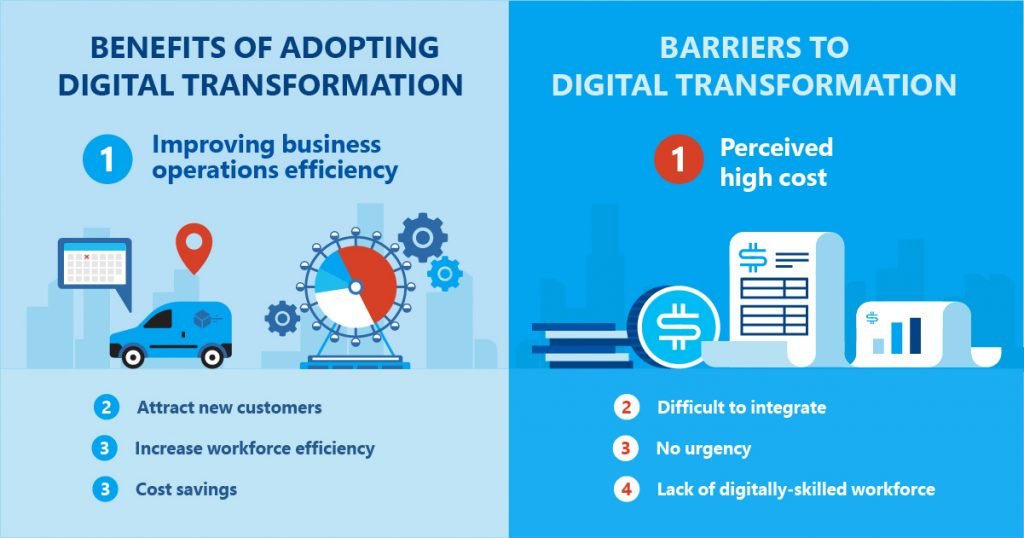
In general terms, Digital transformation can be defined as the integration of digital technology into all areas of a business resulting in cultural changes to how businesses operate and deliver value to customers.

Digital transformation can entail any number of technologies, including ERP software, HCM systems, CRM, Communication Model of Business, eCommerce, business intelligence, mobile applications, analytics, internet of things along with a host of other possibilities.

Being paperless and being digital are not the same in the true sense. Companies can potentially become digital in their core operations but still not become paperless if their employees continue to take printouts of certain documents from time to time. In some cases, documents are printed for signatures and then scanned and uploaded onto a server. In a paperless scenario, all workflows are fulfilled electronically.

HOW TO ACTUALLY START DIGITAL TRANSFORMATION ?

We recommend the following 4 easy steps below to increase your chances of a successful implementation:

1) Set a clear vision of Business Goals and define with Technology

Lets have proper company vision, business model defined and set the target that how technology can be enabler to achieve longer term goals.

2) Determine your digital maturity

At K- CELL we conduct a ‘Fitness Test’ so our clients can assess where they currently stand compared to their vision. We assess this against our Methodology to identify the gaps and develop a plan for ‘next steps’ – documenting in a clear way what is required to bring the overall vision to business in next 4 to 5 years.

3) Think big, Act small.

Develop a roadmap with the core activity and dependencies outlined. We suggest focusing on small discrete deliverables at a time.

4) Define and measure success

When defining your strategy ensure you as a business agree what success looks like at the outset, and just as importantly how you will measure it. Ensure you have the right analytics tools in place to capture this information.

To effectively follow the above 4 steps we need to understand kinds of Digital Transformation in Business or Organization or the product and services we deliver.

Process Transformation

Operational Digital transformation has resulted in cost savings, reduced delivery time and error rates. Like ERP has added real value to businesses in recent years how still that is not enough its needs to be continuously evaluated and changed.  Data, analytics, APIs, machine learning and other technologies offer corporations valuable new ways to reinvent processes throughout the corporation. Example Domino’s Pizza have completely re-imagined the food ordering process; 

Business Model Transformation 

Typically, very tough for established companies to change the rules of business. However some companies are pursuing digital technologies to transform traditional business models. Whereas process transformation focuses on finite areas of the business, business model transformations are aimed at the fundamental building blocks of how value is delivered in the industry. Examples of this kind of innovation are well-known, from Netflix’ reinvention of video distribution, Insurance companies like LIC and Bajaj Alliance are using data and analytics to un-bundle insurance contracts and charge customers by-the-mile.

Domain Transformation 

An area where we see surprisingly little focus—but enormous opportunity—is the area of domain transformation. New technologies are redefining products and services, blurring industry boundaries and creating entirely new sets of non-traditional competitors. B2B Industrial business houses & even wholesalers has leveraged new Apps and Technology, added new service offering for its customers by giving guidance in maintenance of assets or goods sold to them. 


ThyssenKrupp, a diversified industrial engineering company, technology capability to help clients manage the maintenance of elevators with asset health and predictive maintenance offerings—creating a significant new source of revenue beyond the core. 

Cultural/Organizational Transformation 

Full, long-term digital transformation requires redefining organizational mindsets, processes, and talent & capabilities for the digital world. “technology company” by promoting a “culture of innovation,” according to its head of innovation, and by shifting company values to focus on customer-centricity. In this business digitizes its operations, process, HR process, Finance Management, Customer, Logistics, Supply Chains through different technology and as per the requirements of the functions.

Conclusion

Technology is every changing, now the time is not to adopt but be the change in technology. Its not enabler but value add to business & customers if implemented effectively according to our own business requirements and models.

As technology change increases, industries will continue to be forced to change. Corporations that regard and pursue digital transformation in a multi-dimensional way will find greater success than those that don’t.

Share

Facebook
Twitter
LinkedIn

Subscribe

Do we Really Need Strategy For Cost Optimisation or Cost Reduction?

Do we Really Need Strategy For Cost Optimisation or Cost Reduction?

Do we Really Need Strategy For Cost Optimisation or Cost Reduction?

Do we Really Need Strategy For Cost Optimisation or Cost Reduction?

Lockdown has been extended for another two weeks. Even after opening of lockdown I presume personally, market will face difficulties in cutting any kind of cost or cost optimisation. All Business strategies will have to undergo complete transformation. Disruption in supply chain, employee productivity, absenteeism, Cash Credit problem, Demand functionality, Raw Material availability at right price will be big issues in coming time.

Entrepreneurs for few weeks will not be able to understand in which direction business has to be taken. People will do routine activities like closing of books of account, will talk to customers and suppliers and try and understand the situation.

However one thing is certain, strategy in most case will be “cut head count, cut travel, cut training, cut overheads”. However, cost reduction plan may not always be right approach for businesses.

In almost any nature of company, Revenue = Direct Material cost (40-60%) + Labour Cost inc. Salary (10-30%) + Factory/Mfg Overhead(5 to 8%) + Finance Costs (10-15%) + Admin Overhead inc. Selling Costs (3 to 5%) + Profit (Accordingly).

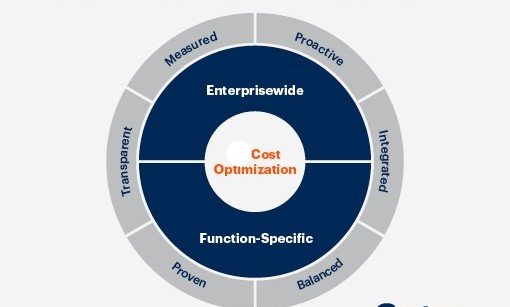
As companies gear up for large-scale cost-cutting measures, they are struggling to identify the most effective means of doing so. Therefore, organizations will have to focusing cost optimization efforts by limiting service offerings or reducing the product portfolio.

A Chinese general Sun Tzu, The Art of War, likens a strategy to river. Strategy follows one clear direction to achieve long term goals. Many executives presume strategy is not required in managing costs. However, majority of them grew up in days of negotiation not knowing how to deal with this pandemic strategically. But Fundamentals of business are going to remain same delighting customers with leading technology, quality and excellent service , all this at lower cost than the competing supply chain.

So How to Manage cost effectively in short term and long term without hurting business morales and survival. Here are some of the points for consideration.


Short Term Recommendations


If you have to take immediate action on costs — even if you haven’t had time to fully formulate a strategic cost approach— you can help to avoid rash decisions.

  1. Target immediate impact. Eliminate, reduce or suspend items that will have an impact in one, six or even nine months, not in years. Examples include expenses incurred and paid monthly, quarterly or on a “pay as you go” basis, rather than annually.
  2. Reduce, don’t freeze. Focus on costs that can truly be reduced or eliminated from the cost base, not just frozen out for the current period only to reappear again in few months of financial year.
  3. Treat cash as king. Target line items that will have a real cash impact, such as real operating expenses like service costs. Make budgeted cash flows to understand position of company as compared to peers.
  4. Plan to do it once. Few organizations cut deeply enough the first time, so they then need to revisit cost cuts — creating a destructive and unproductive cycle of uncertainty, effort and lost productivity. Cut or reduce “hard” enough the first time, and only do it once, especially in workforce decisions where cycles of ongoing reductions can be particularly destructive.
  5. Tackle both variable and fixed costs. Variable cost if reduced in any manner through alternative raw materials, change in procurement policy, improvement in production process will help companies far better.


Long Term Recommendations


  1. AIM and Drive: Understand your cost and value baseline. Establish your current spend and efficiency. Benchmark your spend and efficiency against peers to identify target areas for improvement, depending on enterprise goals. For example setting the target of reducing labour overheads, may result in production disorientation which may hurt overall company goals. Converting Fixed salary structure to variable cost structure through incentive plans may be one of the strategies.
  1. Identifying Critical Costs in the Organisation: Identify and prioritize opportunities.Assess the likely impact and potential downside of all cost measures in scope to ensure the best fit. Make sure to identify and prioritize initiatives that best support your objectives.
  1. Define and Measuring the Key Cost Drivers For example defining & Measuring Procurement Costs, Logistics cost, Repair and maintenance per unit of cost of production will help in avoiding wastages and losses. Reduce & Eliminating the cause of Costs.   
  1. Implementing the Action Review the strategy determined with all the key members of the organisation for smooth execution sticking to overall business goals.
  1. Verifying the Plan again with Cost Monitors  Try and monitor the situation with Benchmarking cost as determined. Variable cost and fixed cost constitute cost price of the product. It is advisable to reduce variable cost in long term which will help in competing with other players advantageously.

Conclusion:


Uncertainty is the new normal, so its imperative that finance leaders carefully weigh the implications of frantic cost cutting vs. thought full cost optimisation. Every cost head has to be reduced strategically then only companies will be in better position to survive rather than just overheads. Don’t Forget Human Resource Transformation and Leadership Traits will play key role for companies to survive and rise again.

Share

Facebook
Twitter
LinkedIn

Subscribe